

Ancient Hindu Temples and the Environment
Environmental Wisdom in Hindu Heritage Monuments

Long before “green building” became a trend, India’s temple architects wove climate-smart features into sacred structures. From the coral-colored towers of the South to the stone spires of Khajuraho, temples were oriented and shaped to harness sun, wind and water. For example, ancient texts and studies note temples were usually aligned to the four cardinal directions and the rising sun, symbolically and practically illuminating the shrine en.wikipedia.orgthehansindia.com. They also used courtyards, high ceilings and carved stone jalis (lattice screens) to channel breezes through the halls thehansindia.comthehansindia.com. Big temple tanks (stepped ponds) and hidden water channels collected monsoon rain academia.eduthehansindia.com, while lofty mandapas (pillared halls) and thick stone walls kept interiors cooler. Even the trees inside and around temples – often banyan, peepal or neem – were protected as “sacred groves”, preserving shade and biodiversity en.wikipedia.org. In short, many features we now call sustainable design were built into temples naturally.
Key design features: East–west orientation to welcome sunlight en.wikipedia.org; open-air courtyards and tall ceilings for ventilation thehansindia.com; stone jali screens to diffuse light and catch breezes thehansindia.com; large stepped tanks and wells for rainwater harvesting academia.edu; dense shade trees and temple gardens acting as green lungs en.wikipedia.org.

South Indian Temples: Gopurams, Courtyards and Water Tanks
In South India, Dravidian temples are famous for their towering, colorful gopurams (gateway towers) and sprawling courtyards. These multi-tiered towers (like the one above at Madurai’s Meenakshi Temple) are covered in carved deities and gleaming with paint. Despite the bright sun overhead, the temple interiors stay surprisingly cool. The reason is twofold: the structure is built of thick granite and brick that block heat, and the inner areas have wide halls and central courtyards that invite cross-ventilation. Ancient design guides emphasize these same principles – “high ceilings and open courtyards help regulate temperature”thehansindia.comapam-napat.com. Pilgrims in Madurai see pigeons nesting among the statues, and breezes curling up the shaded pillars.
South temples also honor water and nature. In front of many shrines lies a temple tank – a large, stone-lined pond with steps descending to the water. These tanks collect monsoon rain and supply water year-round for rituals. For instance, the Pushkarani (tank) of Chandrachoodeshwarar Temple in Tamil Nadu stores rainwater that percolates to recharge the local aquiferacademia.edu. The photo below (a typical temple pond) shows how broad steps lead down to green water, surrounded by trees:
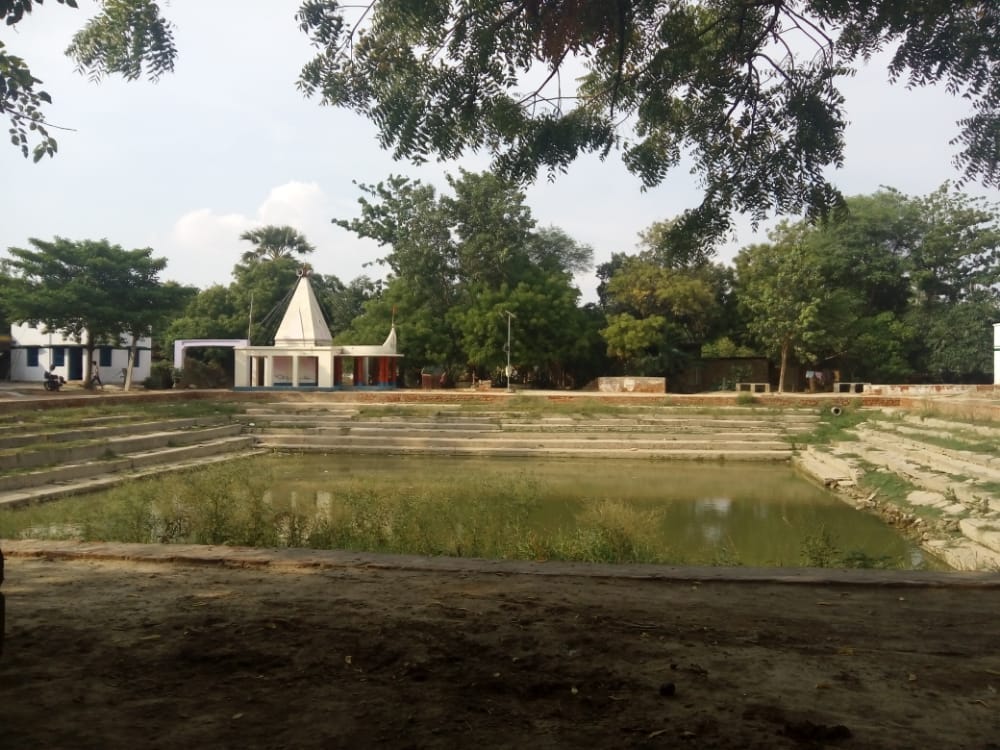
Image: A South Indian temple’s stepped water tank (pushkarini), with tiered stone steps and shrubbery, used for ritual bathing and rainwater storage.
According to researchers, such temple tanks were vital community reservoirs: they “harvest and store rainwater for direct consumption” and help “recharge groundwater, maintaining the aquifer balance” academia.edu. In the image above, the tank’s flat stones hold cool air, and its water feeds surrounding wells. Next to these tanks, sacred trees often grow. Across India, thousands of sacred groves hug temple grounds, preserving rare plants and wildlife en.wikipedia.org. In our example pond’s shade, a leafy banyan might spread its canopy – its roots literally wrapped around the stone steps. In this way, the temple courtyard becomes like an oasis: open to sky for light and rain, but cooled by water and greenery.
Central India Temples: Stepwells and Stone Coolers
In central India (including modern-day Madhya and parts of Maharashtra and Odisha), temples follow the Nagara (northern) style of architecture but share the same environmental wisdom. They often stand near rivers or streams, and use stone in clever ways. For example, many forts and temple complexes include stepwells (deep stone wells with flights of stairs) to store water and cool the air. The photo below is one such stepwell inside an old fort:
Image: A deep stone stepwell (bawdi) in central India. Sunlight on the top steps contrasts with the cool, greenish water at the bottom. The thick stone walls and shaded recesses keep the lower chamber much cooler than the surface.
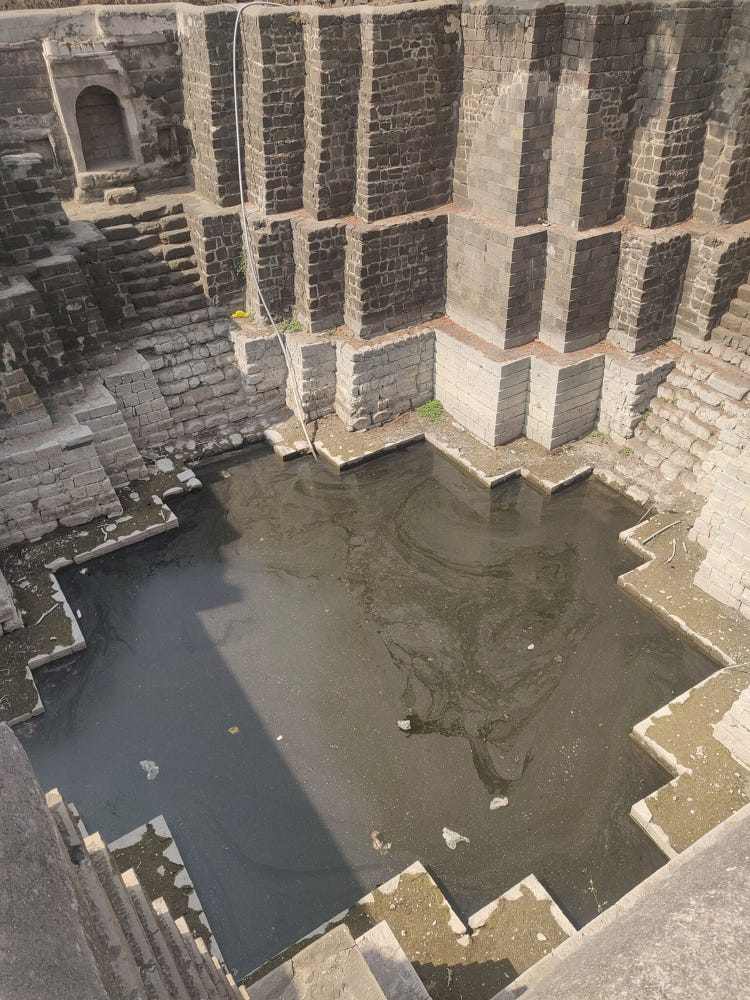
This stepwell exemplifies passive cooling and water storage. Even under a hot sun, the deep water in the pit remains cool, and the sunlit steps slowly heat up only near the top. As one source notes, ancient builders “harnessed nature’s power” by using water to cool the air thehansindia.com. The stepwell’s walls, heavy with thermal mass, absorb heat during the day and release it slowly at night. It’s like a giant underground air-conditioner. Such stepwells could supply water throughout the year and keep temple precincts humid and cool in summer.
Elsewhere in Central India, large east-facing temples perch by their own tanks. For instance, the Lingaraja Temple in Odisha stands beside the Bindusagar tank, symbolizing the morning light on water (Surya temples also face east). Even without a photo, one can picture these stone halls: daybreak light falling on polished pillar floors, and breezes off the nearby water. Regional variations appear too: in humid regions (like Konkan coast), temples have steep tiled roofs and open verandahs to shed heavy rain. But the constant is sunlight and air – all temples use design to let in rays and breezes deliberately, not block them out like modern glass boxes.
Khajuraho Temples: Spires by Water and Sun
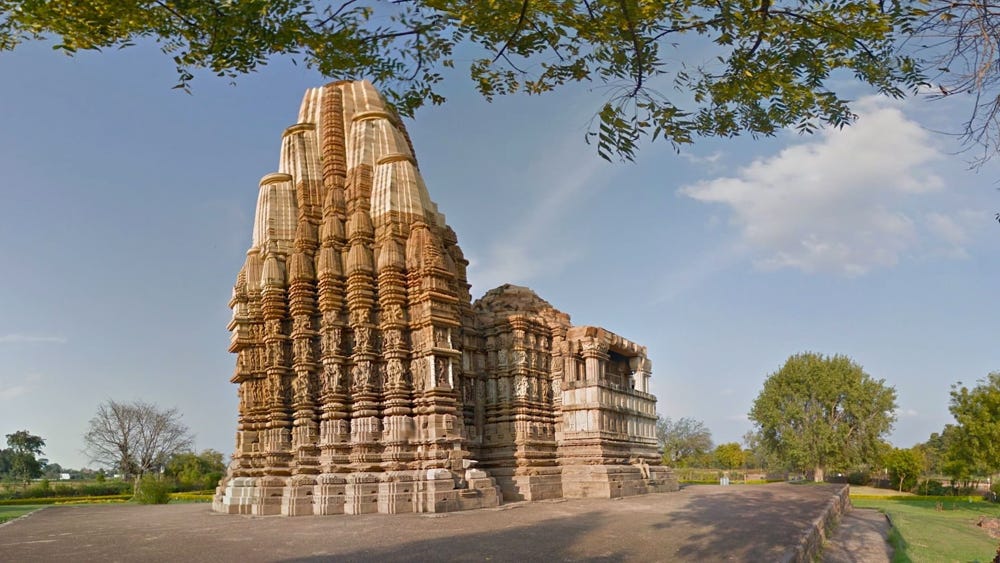
In the Bundelkhand plains of Madhya Pradesh, the Khajuraho temples (UNESCO World Heritage site) combine soaring sandstone spires with water features. The Dulha Dev Temple above, with its fluted shikhara (spire) etched by morning light, illustrates the Nagara style. Importantly, nearly every Khajuraho temple was intentionally placed near water. According to archaeologists, the temple group is “clustered near water” – today fed by ponds like Sib Sagar and a local riveren.wikipedia.org. Local legends speak of 64 ancient ponds around Khajuraho (56 are still identified)en.wikipedia.org, suggesting a sophisticated rainwater network. In this landscape, the temple isn’t a lonely tower, but part of a water-sensitive community.
Another consistent rule applies here: almost all Khajuraho temples “face the sunrise”en.wikipedia.org. This eastward alignment captures the first rays of dawn on the carved figures – a deliberate design for lighting. In the photo above, you can imagine the sun rising behind you, shining across the temple’s tiers. By contrast with a modern skyscraper that might rely on electric lights and AC, these temples naturally welcome the sun and wind. The stone carvings themselves have symbolic openings and niches that channel air. For example, many walls have perforated screens that let gentle breezes pass through the mandapa.
Lessons for Today’s Architecture
Studying these examples reveals how traditional Hindu temples were inherently eco-friendly. They treated sun, wind and water not as problems to block, but as resources to use. Thick stone walls and shaded corridors are like natural insulation; pools and trees act like evaporative coolers. Scholars note that “ancient architecture can create buildings that naturally cool themselves” by using courtyards, windcatchers and water features thehansindia.com. Modern green designers are now re-discovering these ideas (for instance, replacing HVAC systems with passive ventilation).
Just as the 12th-century temples managed water sustainably (via tanks and wells)academia.edu, today’s buildings can use rainwater harvesting for toilets and gardens. The temple example shows it’s possible to combine spiritual purpose with environmental sense. Imagining walking through one of these temples – say along the shaded gopuram in Madurai or the stone steps of a Khajuraho sanctuary – you see a clear analogy to a modern eco-building. By “harnessing nature’s power” in architecture thehansindia.com, these sacred spaces teach a powerful lesson: that comfort and climate-control can be achieved without sacrificing the planet.